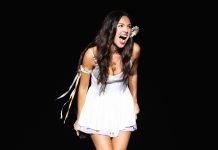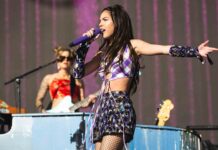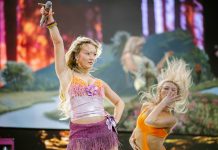

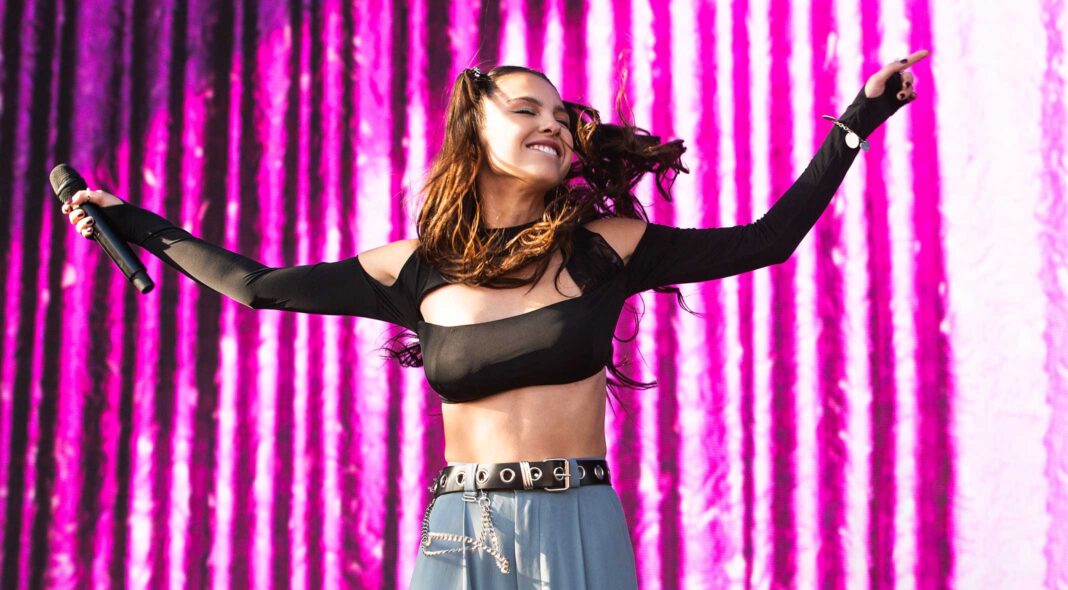
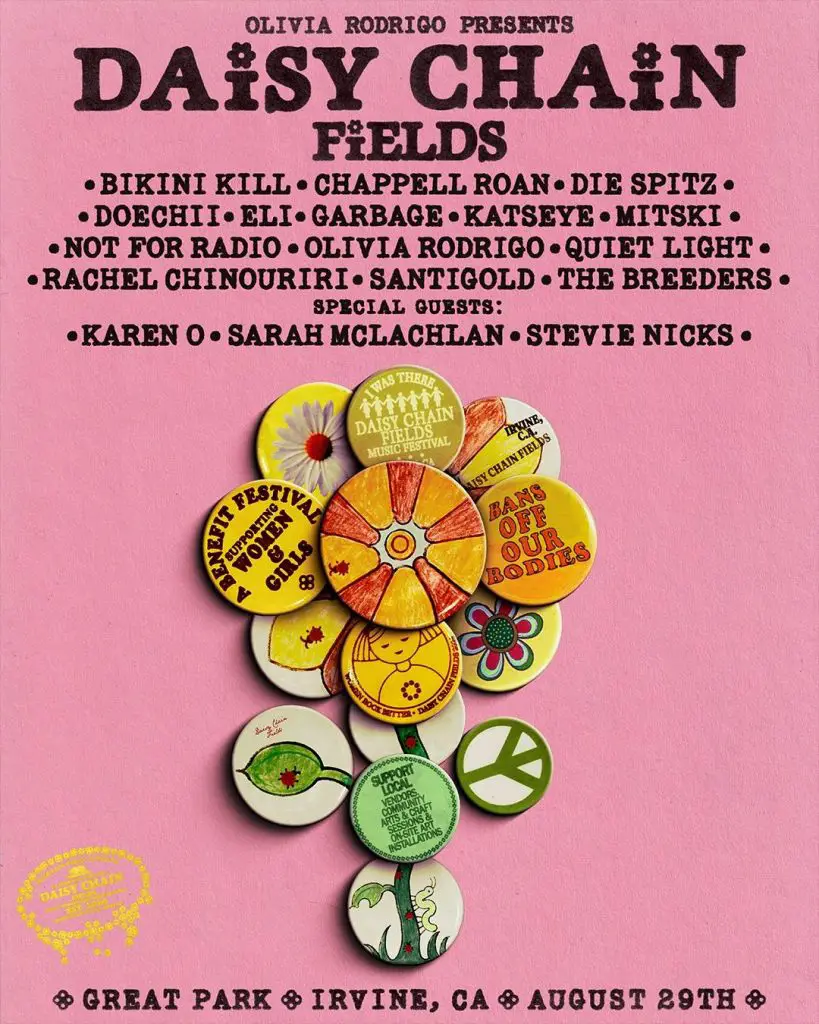
In case you missed it, this week Olivia Rodrigo announced the launch of her own music festival – Daisy Chain Fields – a one-day event taking place in Irvine, California this August featuring a killer lineup of female acts.
Not content with just putting on a great day, Daisy Chain Fields is a benefit festival, with net profit going to non-profit organisations that advocate and support women and girls. Did Olivia Rodrigo need to do this to boost her album sales? She did not. Her third album You Seem Pretty Sad For A Girl So In Love is her fastest-selling, making her the youngest international artist to break 100,000 UK albums in release week in more than two decades. In the States, the same record made her the first artist in Billboard history to have their first three albums and lead singles top the charts, as well as the only artist to have every song from their first three albums hit the Top 40.
In short: she’s a big deal. Which makes it even cooler that she has taken the time to create something that’s about fostering community for young music fans and supporting charities that help young women have happy, healthy and full lives.
Back in 2020, when The Forty-Five was just a baby website, Izzy Bee Philips of the band Black Honey and I were having the cyclical chat about why festivals weren’t booking more women. Reading and Leeds had just announced their bill for 2021 with “double the headliners” (all of them men) and it seemed that a global pandemic had provided the perfect excuse for the music industry to stop caring about progression.
We sketched out a lineup poster of all the brilliant women we’d love to see play a festival. It was a silly, dreamlike exercise because – as any festival booker will tell you – the realities of juggling touring schedules, exclusivity contracts, finances and artist egos make booking an IRL festival a little bit harder than just drawing a poster. For too long, the argument had been that you needed big headliners to sell tickets. And – because the industry had been male-dominated for aeons – there weren’t enough female acts at the level of the big-ticket, male legacy acts that would sell out your festival. “Not our fault”, yelled the likes of Live Nation and even Glastonbury.
Six years later, most of the biggest artists in the world are female – and I’m thrilled the pop landscape looks so different. But even back in the 90s, when men with guitars topped the charts and dominated the airwaves, one woman called bullshit on the claim that women didn’t – and couldn’t – sell.
The story of Lilith Fair
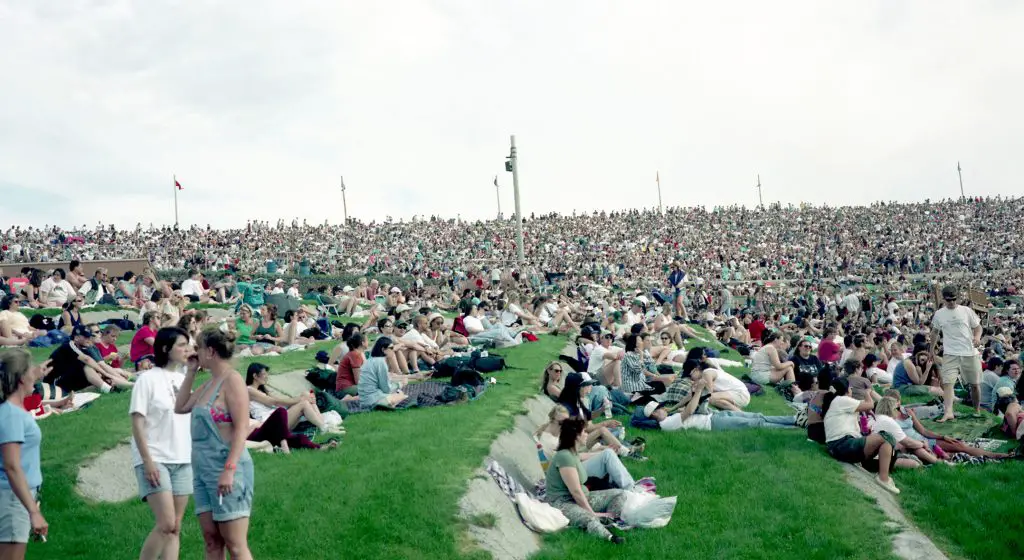
In 1996, fed up with concert promoters and radio stations refusing to bill two women next to each other, Canadian folk-pop singer-songwriter Sarah McLachlan decided to take matters into her own hands. Going against industry advice, she scheduled a tour for herself and American singer-songwriter Amie Mann. It was a sell-out – and at her hometown gig, McLachlan recruited Lisa Loeb and Michelle McDorey to join them on the bill and called it Lilith Fair – taking the name “Lilith” from religious mythology that said Lilith was Adam’s first wife before Eve – one who refused to be subservient to him.
As the show wrapped, McLachlan felt as if they’d started something special and the following year decided to make Lilith Fair a touring festival – a chance to celebrate the great music being made by women in the late 90s. But still, despite having proved itself successful the year before, it met resistance. Promoters would not take the risk with a predominantly female bill, citing the previous year’s success as a one-off or fad. So McLachlan took on the costs herself, running the festival across the US for the next three consecutive years, with artists such as Fiona Apple, Sheryl Crow, Pat Benatar and Missy Elliot joining the bill.
Lilith Fair tour brought together two million people over three years and raised more than $7 million for charity. Not only a music festival, it was a place to forge community. In the ‘village’ there was a craft market, talks from activists and pop-ups from women’s charities such as Planned Parenthood. It became the most successful all-female music festival in history, one of the biggest music festivals of the 1990s, and helped launch the careers of many well-known female artists.
Olivia Rodrigo and Lilith Fair’s lasting influence
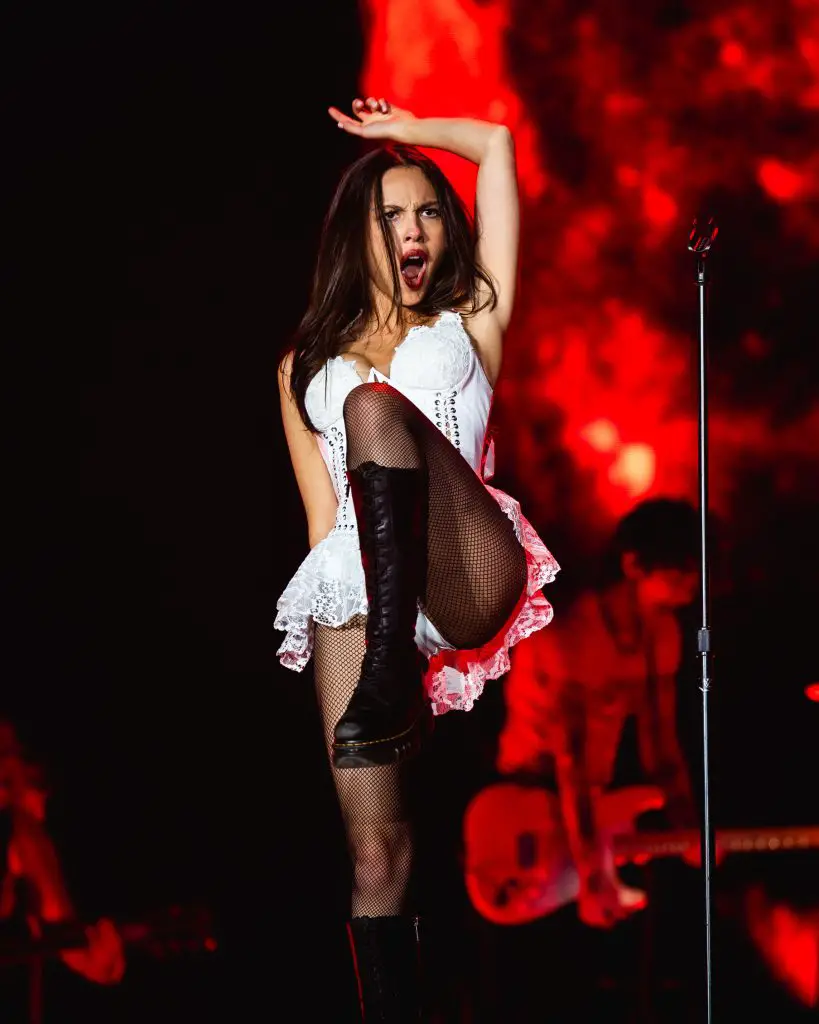
Olivia Rodrigo wasn’t born until after Lilith Fair shut up shop but its influence on future generations has been profound. Speaking to Diane Sawyer this week about the launch of Daisy Chain Fields, Rodrigo admitted the festival’s impact.
“Lilith Fair was a huge inspiration in me starting this festival,” she said in the interview. “And actually, the first person that I called when I decided that I wanted to do this festival was Sarah McLachlan.”
And she’s not alone. I interviewed Muna’s Katie Gavin in 2024, who described her solo record as ‘Lilith-Fair core” and spoke at length about the impact artists such as McLachlan and Ani DiFranco had on her artistry. On TikTok, you’ll find countless Gen Z women posting videos about a magical 90s festival they’ve discovered, where all the acts were female.
It’s baffling to think nobody has tried this since. All Things Go Festival – with sites in New York, Maryland and Toronto – has boasted a fantastic female-focused lineup over the last few years and Loud Women is gaining momentum worldwide for showcasing emerging talent – but Daisy Chain Fields seems to have gone a step further, embodying the same community and charitable focus as the original Lilith.
It’s a class act from Rodrigo, who continues to be a shining example of how to be a pop star in 2026. Whether it’s standing up for Gaza, calling out Trump and ICE or rallying for women’s reproductive rights, she has fearlessly spoken her mind – not concerned about what it might do to album sales or follower metrics.
“I definitely try to be careful with my words,” she recently told the BBC. “But simultaneously, the women I looked up to when I was young were really outspoken, and that was one of the reasons I adored them.”
And with some of those very women – McLachlan, Kathleen Hanna, Stevie Nicks – joining her on the bill, it’s an endorsement that this festival is far from a publicity stunt or money grab, it’s a young woman at the peak of her career considering how she can use her platform and influence for good. People like that are few and far between in this world let alone in the major-label machine and if that’s not a reason to put a daisy in your hair this summer, I don’t know what is.
Daisy Chain Fields takes place at Great Park, Irvine California on August 29. Tickets are currently sold out – but you can join the waitlist.