
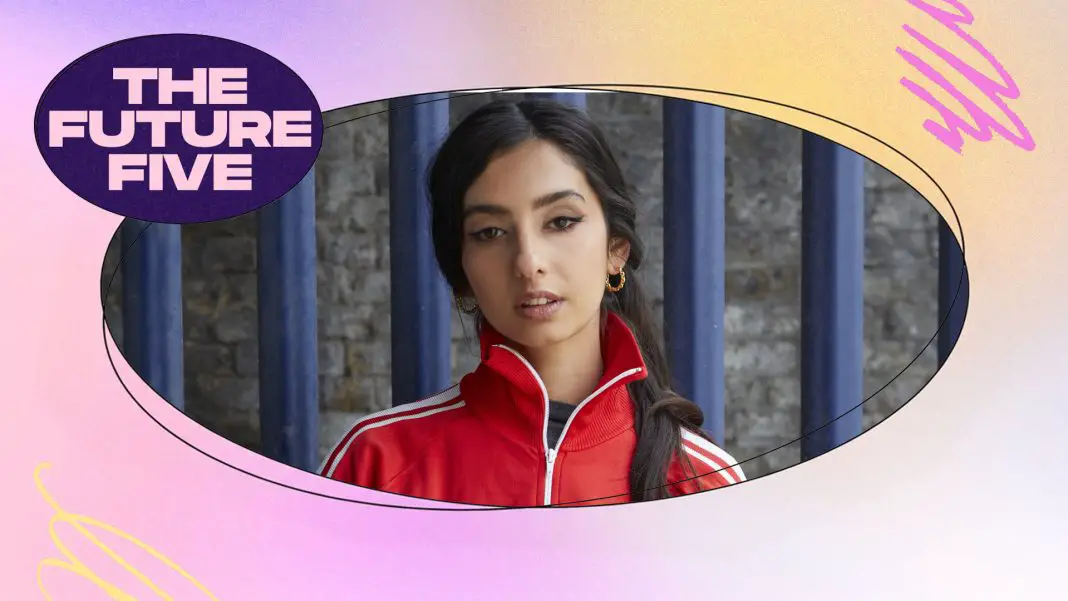
Neda’s journey into musicianship has been far from conventional. The singer-songwriter seamlessly pulls together influences from her Iranian heritage, South London upbringing, and die-hard love of country music. After five years spent tirelessly honing her craft, Neda has found her feet in terms of sonic identity. Ahead of the release of her upcoming EP, she gets us up to speed on her story so far.
Congratulations on the new EP ‘And Then Came September.’ How are you feeling about its upcoming release?
I’m really excited. It’s taken a while to get it right in terms of production, but I’ve finally found the sort of music I want to release.
It’s been four years since your first EP ‘To Be Loved By You.’ Why did now feel like the right time for your next project?
If you listen to the two EPs, you’ll notice they’re quite different. I’ve definitely grown as a songwriter. I always felt confident as a vocalist, but I really had to practice songwriting. I worked on the craft every single day until I was writing songs I was proud of and loved. With this EP, I found myself listening to the demos over and over again because I loved the songs. I didn’t really have that connection with the first one. Getting to that point as an artist can take a while. Some people are really lucky and find their sound within the first year, but for me it took a bit longer.
You can definitely hear that time and energy has been put into developing your style. It’s so worth the wait. Now that you’re more confident with songwriting, what does your writing process typically look like?
I mostly write on my own. It starts with just chords on the piano. When I find a progression I like I’ll improvise a melody, then get my voicenotes out and start recording. Once I have a melody for the verse, chorus and pre-chorus, words form naturally. That’s my go-to style, but if I’m writing with other people, it can be different. I wrote one song where the co-writers were very fixated on finishing the lyrics for the chorus first, and everything else came in after. Some writers like to start by making sure the production is really great, then write the lyrics on top of that. Everyone brings their own little flair into the process.
‘And Then Came September’ explores the aftermath of a breakup. How did writing it help you move through that difficult experience?
It was definitely a cathartic experience. It was my first heartbreak, and the timing really aligned; the relationship ended just as I was working with my first management, and had time to write on my own as well. At the time I was listening to a lot of ‘60s country music which is lyrically centred around love, loss and heartbreak; songs like ‘Make The World Go Away’ and ‘She’s Got You’ and ‘There Goes My Everything.’ Because of what I was going through, I was able to bring elements of them into my own work. The writing experience made everything a lot easier to process.
What do you hope will resonate with listeners going through a similar tough time?
I write a lot of ultra-specific lyrics. I try to be as honest and candid as possible. It would be great if people who listened to my EP could be inspired to find a creative outlet themselves, whether that is songwriting or something else like journaling. Even just inspiring people to talk openly would be really amazing.
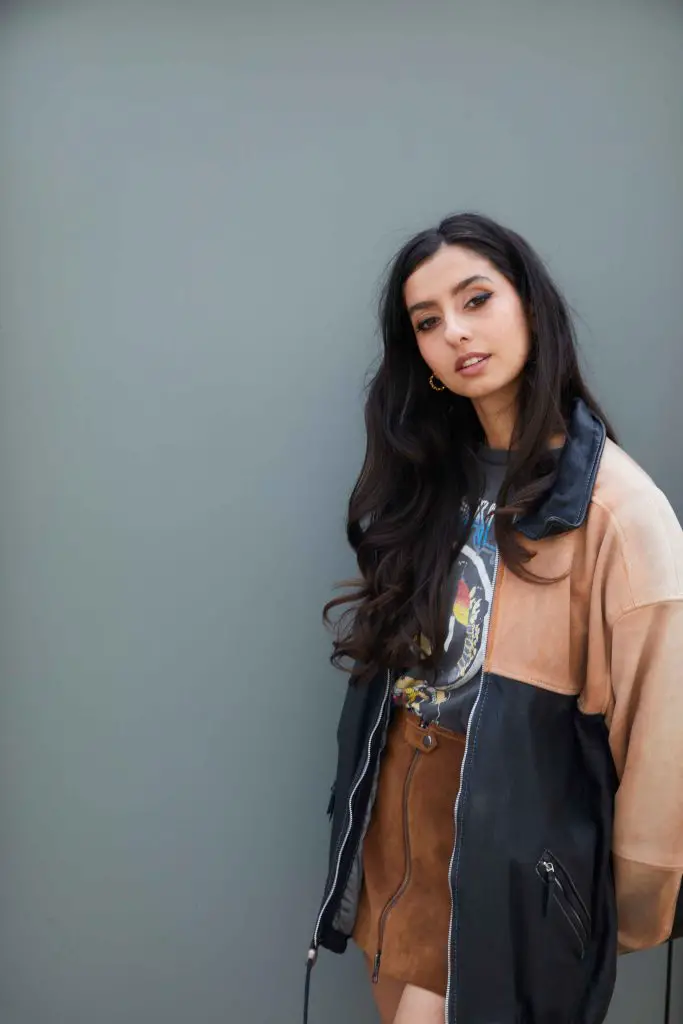
The second single ‘Surface’ is an interesting track in that it sounds very sunny and upbeat, but its lyrics are tragic and dark. What was the idea behind pairing these two contrasting elements?
The dichotomy of songs that are lyrically dark and instrumentally upbeat is something that has always really fascinated me. There are a lot of great artists who do that. When going through a sad period of life, it’s easier for songwriters to write melancholy music, but I have always liked the contrast. Someone who does it really well is Amy Winehouse, especially on ‘Back to Black.’ It’s a complete heartbreak record – all the songs are lyrically gut-wrenching – but you can sing and dance and scream along to the choruses instead of crying the whole time it’s playing.
What’s your personal favourite track on the EP?
I really love ‘Leave.’ It was the first song I wrote for the EP, and I was like ‘This is definitely staying on the project.’ It was co-written with Tom Cully; I wrote the lyrics and the melody, and he came out with the drum groove. The drums in that song are a hook in themselves. When I first heard it, there were a million different melody ideas I wanted to play around with. I also love ‘Frontline’ and ‘Head Over Heels.’ You can hear the country influences a lot in those tracks.
Talk me through your musical upbringing; which artists and genres have been impactful in your life up to now?
My parents are immigrants from Iran. They moved to England after the 1979 revolution. My mum is a really talented vocalist; she really wanted to be a classical Persian singer, but in Iran it’s illegal for women to pursue a career as a singer, or to sing pop music in public. Instead, she used to sing around the house and at family gatherings; a lot of Mahasti and Googoosh and Hayedeh. Those are my earliest memories; everyone just loved her voice. She’s a stronger vocalist than I’ll ever be. Whenever she was facing difficulties such as not being able to visit Iran, she would just sing, and it would instantly lift her mood. Witnessing that growing up was such a profound experience.
My older sister used to listen to a lot of pop, particularly Justin Timberlake. A lot of those big pop choruses had a subconscious effect on me. I try to listen to as much music as possible, but still gravitate towards pop songs. Snoh Aalegra is another artist with an Iranian background like me; when I found out about her, I felt that what I wanted to pursue was possible. My other favourites are Julia Jacklin, Connie Francis, and Lily Allen – she inspired me to sing in my British accent.
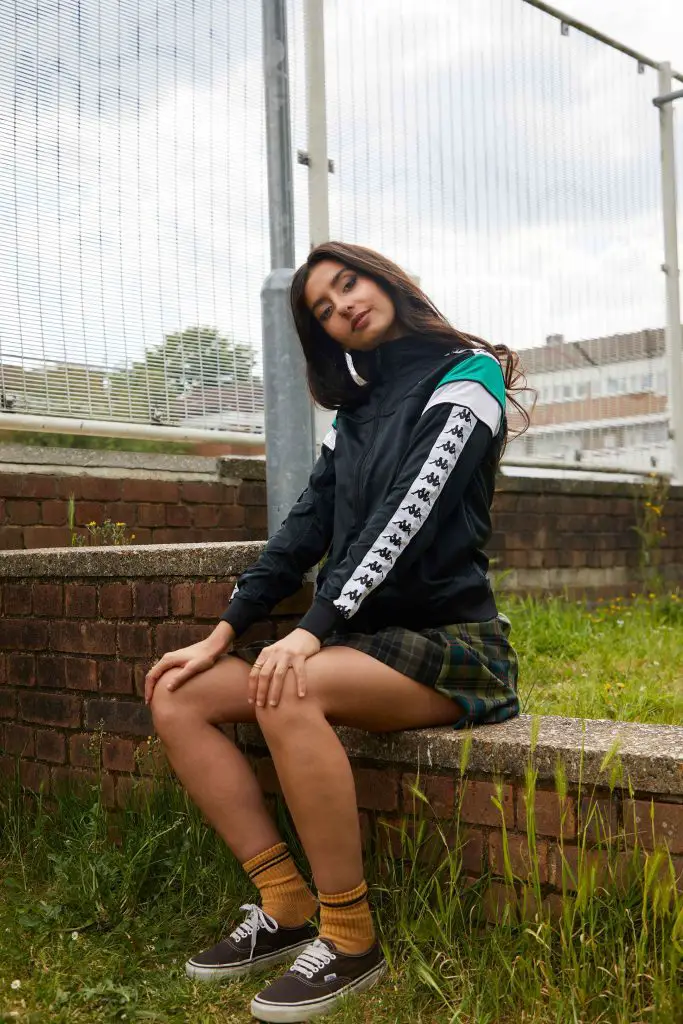
Your South London identity feels pretty integral to your music.
It’s very important. I was born and raised in South London, then went to Goldsmiths University in Lewisham. I find the area’s diversity and creativity really inspiring. On my first EP I mention specifics in my lyrics, like the 136 bus which I used to get to Uni all the time. With this EP, though, it’s mostly my accent that makes it obvious, and that is intentional.
Were any Persian influences included on the EP?
We added some Persian instruments: tombak [a type of hand drum] and santur [a hammered dulcimer]. There were two really great Persian musicians who joined us in the sessions. They really helped lift the production and represent my heritage. You can hear little snippets of them throughout each track. I immediately notice it, because I know the instruments, but hopefully other people will notice the variety they add to the project as well. I didn’t end up singing in Farsi on this project, but I’d love to experiment with that on future records.
When bringing this variety of influences together, did you feel any pressures to fit a specific pop mould?
Not really; I don’t like following a formula. If you go in thinking ‘I just want to write a hit’ it’s quite soul-destroying. I try to ignore all that, and just combine all the music I like. Because I naturally write in verse, pre-chorus, chorus form, my songs always fall under the pop umbrella, but some of the biggest pop hits don’t follow that generic structure; Sabrina Carpenter’s ‘Please Please Please’ is completely different to any other pop song from the past ten years, and it was a Number One.
Like Sabrina and Chappell Roan, you’re bringing country influences back into modern pop. What is it about country music that resonates with the current generation?
At its heart, country music is super accessible. I fell in love with it during uni when I was studying music. A lot of students in my year were trying to be really avant-garde, but I found myself leaning towards songs from the ‘60s and ‘70s that are simply built on guitar, a really beautiful melody, and relatable lyrics. It’s so unpretentious, and that’s why it fits with pop music.
What’s next on your agenda for 2026?
I want to do more gigs. I did an intimate gig a few months ago and I really loved it. It’s a way of connecting with an audience and with songs that you don’t get from just releasing music. I’m also writing a third EP at the moment.
What’s your dream venue to headline?
I really want to perform at Omeara. My friend Ashley Singh performed there recently, and it was so inspiring seeing someone I studied music with headlining there. If it happened in the next year or so, that would genuinely be a dream come true.
Do you have any plans for an LP?
My thing with albums is I’d never do a really long, 20-track one. The only lengthy album I love listening to is Connie Francis’ ‘Gold,’ but that’s because she’s my favourite artist ever. But I still believe in having a body of work where all the songs fit into the same world. That’s a dream of mine. I really want to be an album artist in the next few years.
Neda’s EP ‘And Then Came September’ will be released in spring.