
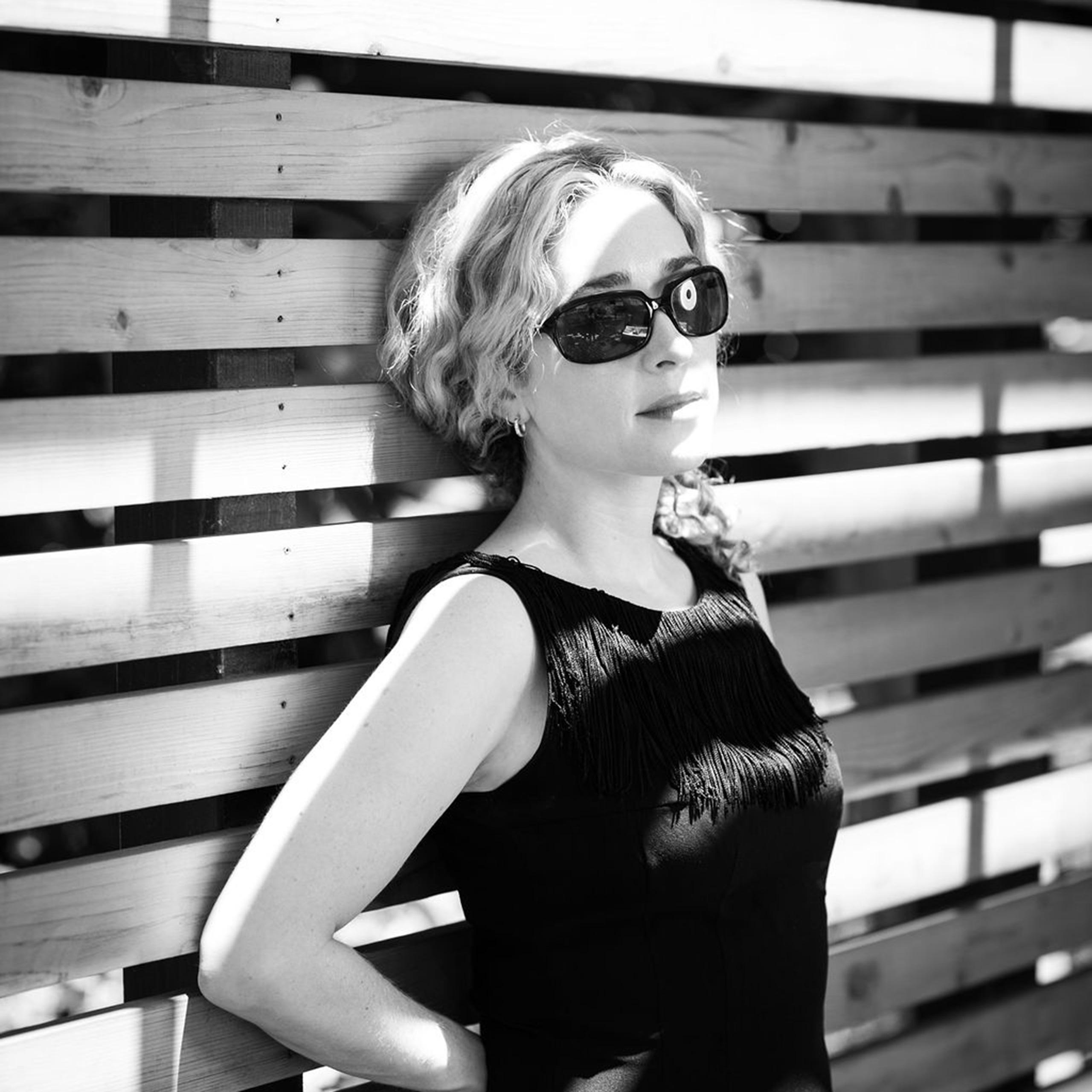
Blondshell
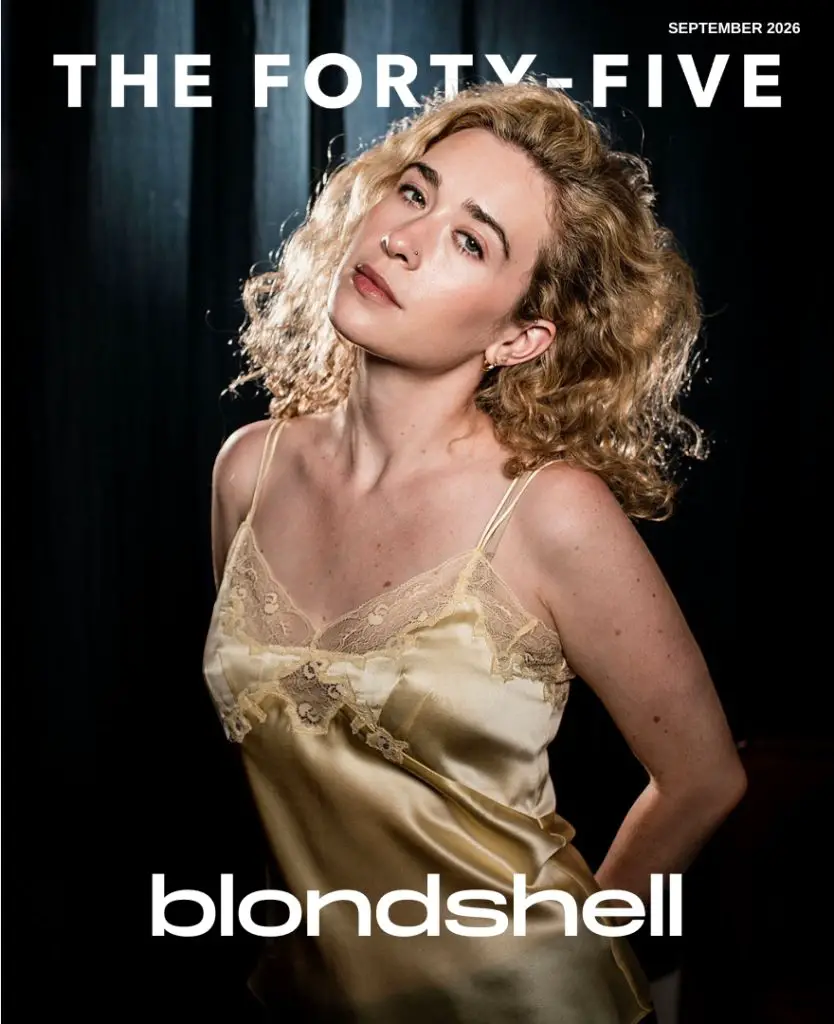
On her third album, Blondshell is surviving a violent world by focusing on the light. We meet her in LA to talk all things ‘Violins’.
Words: Charlotte Gunn. Photos: Katie Stratton.
Blondshell – much like all of us – is on a quest to find out what it means to be happy. Through her affecting, grunge-rock and whip-smart lyricism, the LA-residing New Yorker has taken fans on a journey through the dysfunctional relationships of her early twenties on her self-titled debut album (2023), back to childhood and its complex familial bonds on second album, ‘If You Asked For A Picture’ (2025), and now, for album three, ‘Violins’ – out this month – she’s replacing an observational approach to songwriting with more immediacy: saying what she wants, when she wants it. “Not to be woo-woo about it,” she tells us, sitting on a sofa in a Silver Lake apartment, “But I do think holding things in has a high potential to literally affect your growth.”
And there has been a lot of growth in Sabrina Teitelbaum’s world over the last decade. At 22, she got sober, something that now sits much more comfortably than it did at first. “When I first got sober, I felt really matronly and wholesome – not in a good way. I felt so rock and roll when I was partying, and then I had this massive shift where I was like, “Oh my God, I’m a grandmother!”. Now, in the final year of her twenties, those feelings have subsided, knowing the things that make her happy – her relationship, her dog, trips to the beach – “I used to feel that my life was defined by the absence of alcohol but now I don’t. I feel good about the age that I am, and I feel excited to go into my 30s. I think it’s chic.”
I feel good about the age that I am, and I feel excited to go into my 30s. I think it’s chic.
Blondshell
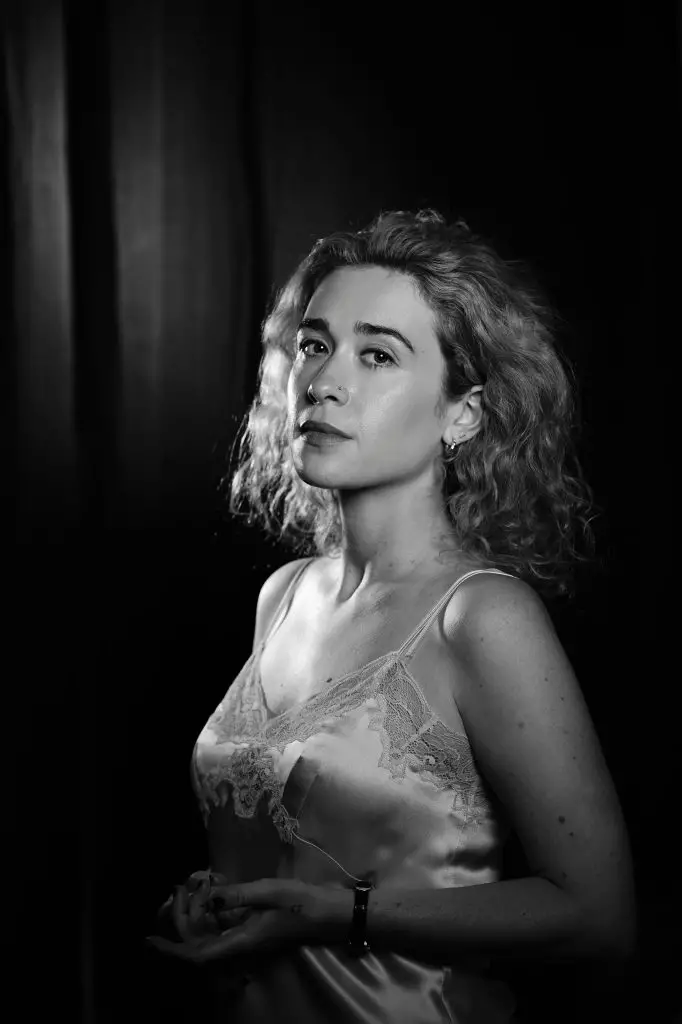
‘Violins’ finds Teitelbaum in this new self-assured era: a little more content with life and a lot less likely to overexplain. “I think people will find the meaning,” she says. “Or the song will find the person. I don’t want to beg people to understand what I have to say.”
It helps that, three albums in and signed to Partisan Records, Teitelbaum knows there’ll almost certainly be a next time. Her first two records came with a compulsion to cram everything in – “What if this is the only record I ever make? I have to fit everything of my entire life” – whereas, with a growing confidence in her abilities and career, comes the luxury to treat each album as a snapshot.
“I wanted to mix it up because the first two records felt really like I was introducing myself to people. But if somebody doesn’t know me, they can go back and find those.”
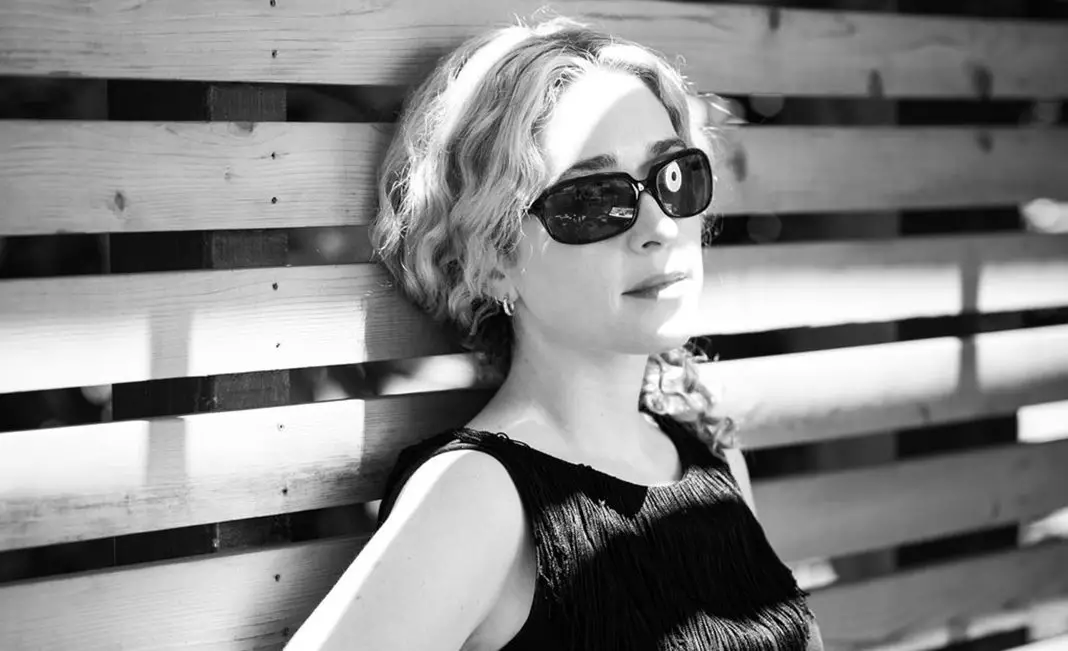
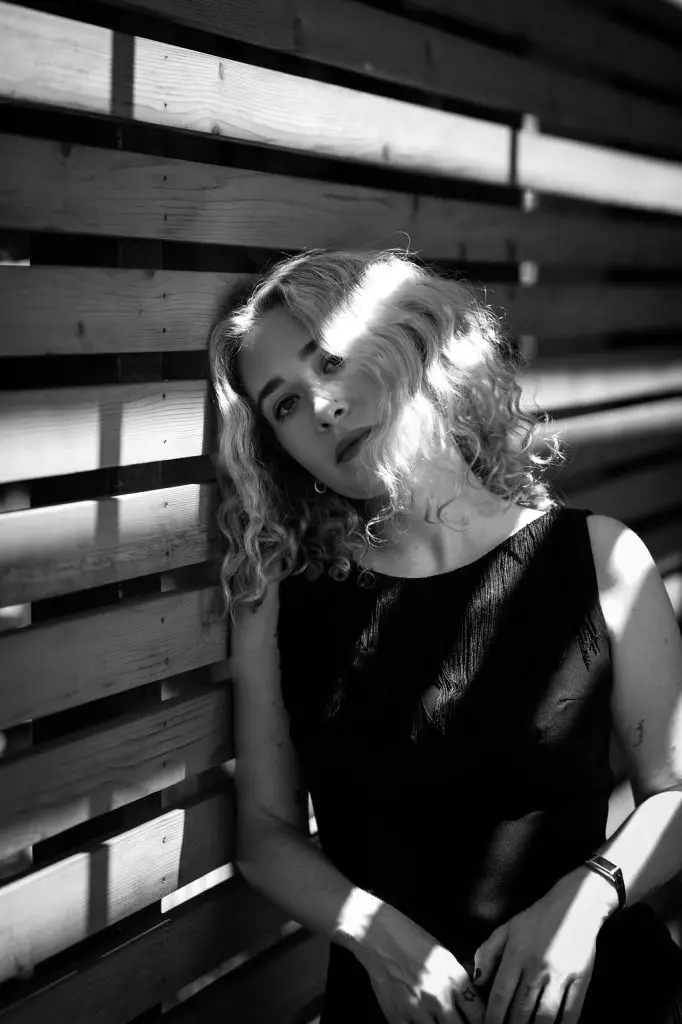
There was also a desire for this blue-eyed, blonde-haired woman not to be taken at face value – the same sentiment that inspires her somewhat tongue-in-cheek stage name. “When people meet me for the first time, on a surface level, they see my femininity, my hair, and whatever. On the first two records, it felt important to me to show people the things that I thought maybe they wouldn’t pick up on – like my masculinity and how I am in my house and all those things. But with this record, I feel like I’ve already shown you those things. You know they’re there. I can show you other sides that are also important to me.”
That confidence has spilled into the world around the album, too. Having introduced Blondshell with two relatively DIY campaigns – songs and demos made at home and artwork shot by those closest to her – this time she allowed herself to think bigger. You can see that level-up in the sexy, minimalist video for ‘Violins’ and across the record’s sonic diversity. She’s still working with producer Yves Rothman, her collaborator across all three albums, but ‘Violins’ stretches its palette, pulling from the wiry post-punk of Gang of Four, the melodic nous of Teenage Fanclub and The Go-Betweens and, less predictably, Sade.
Thematically, Blondshell hasn’t shied away from the big stuff; violence, religion, misogyny are all explored across the record’s eleven songs.
On ‘New Age Trojan Horse’, she takes aim at the modern man who has learned all the right words to thinly veil a shitty attitude: “1965 mind in a new age trojan horse. Violence isn’t primal – but it’s just my right”, she sings.
“Everybody knows that you’re not supposed to be openly misogynistic in liberal cities,” she explains of the song’s subject matter. “So the idea of equality becomes more openly talked about without exploring what that means. That song is lighthearted… but it’s like, even though you know how to utilise therapy language, it doesn’t mean that you’re a feminist.
“Oh and stop using the word gaslight incorrectly,” she deadpans. “Nobody’s gaslighting you.”
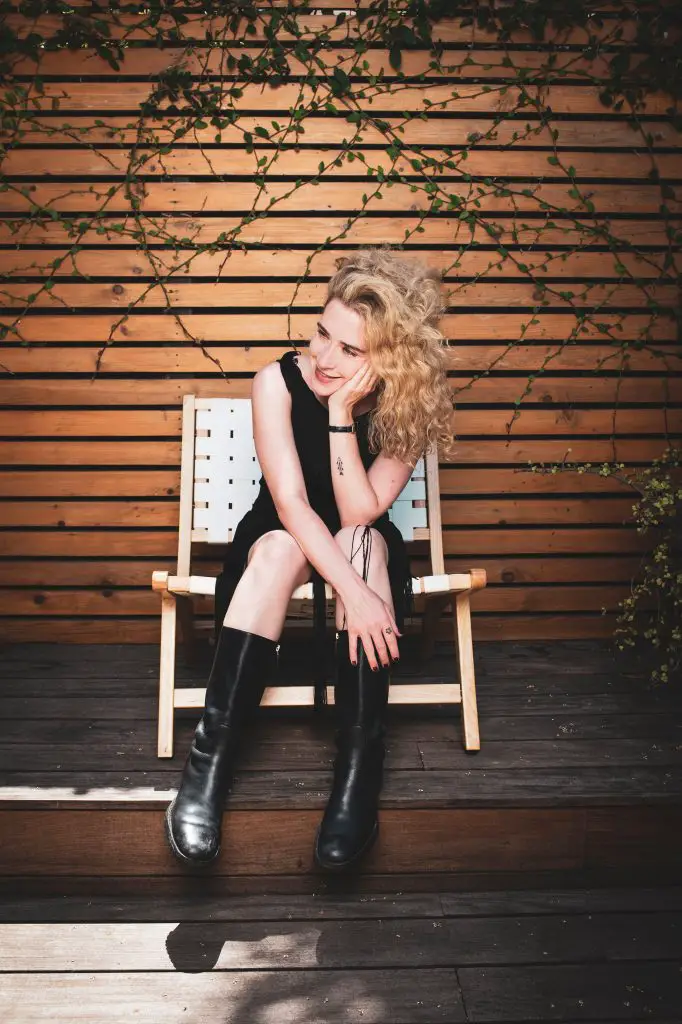
Even though you know how to utilise therapy language, it doesn’t mean you’re a feminist
Blondshell
Her ability to reduce bravado bros to nothing with one withering line has long been Blondshell’s superpower. So, too, is her eye for the mundane.
“Little drive out to Carmel, little bowl of shrimp cocktail, you can’t sleep with the sounds of seals, I can’t sleep with sound at all”, she sings on penultimate piano track (and one of her favourites) ‘Reinstall’. Elsewhere, on ‘Two Fried’, she likens her breasts to a pair of fried eggs before landing on the wonderfully simple admission, “I think I like my legs”. It’s the kind of funny and specific everyday detail Teitelbaum has always been good at. “My creative life has to feel lived in,” she says. “That’s why I have such a hard time with writing sessions. There’s no separation in my mind between what I’m writing about and how I’m living. I don’t want to feel like two people.”
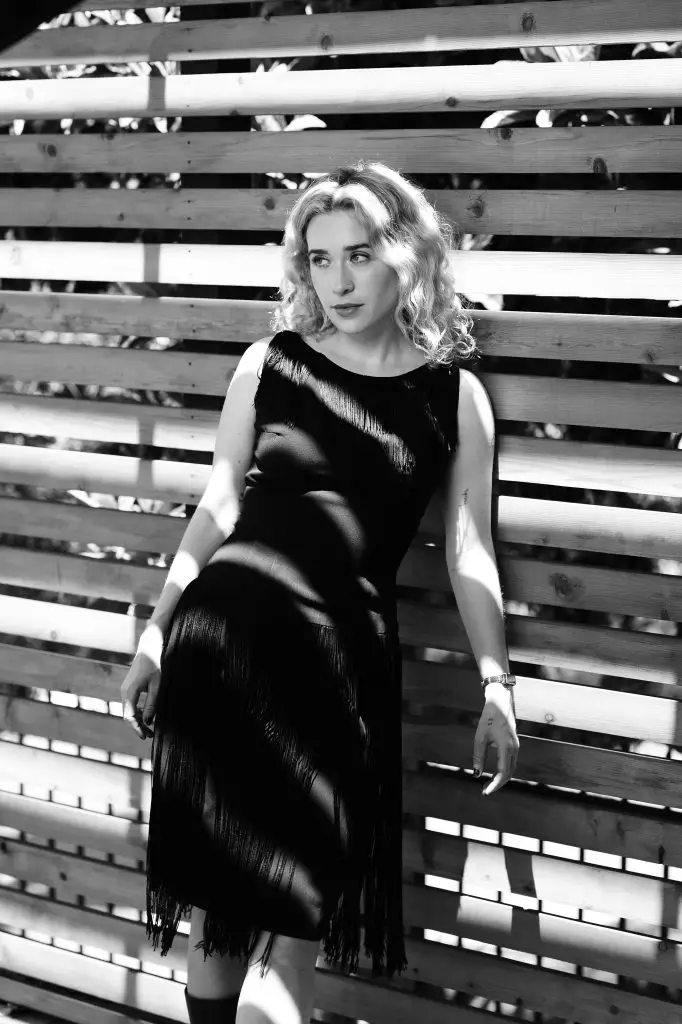
She means that quite literally. There is no Sasha Fierce-style distinction between Sabrina Teitelbaum and Blondshell – no character she needs to summon before going on stage. At her first Coachella this year, she was styled for a show for the first time. She was due to wear a silk slip dress, but was told to travel to the stage in a T-shirt so as not to wrinkle it. Once she got there, she decided she wasn’t changing.
“I was like, I’m not putting on the dress. I’m just gonna wear the T-shirt because I felt like myself,” she says. “I never want to feel like I’m not myself.”
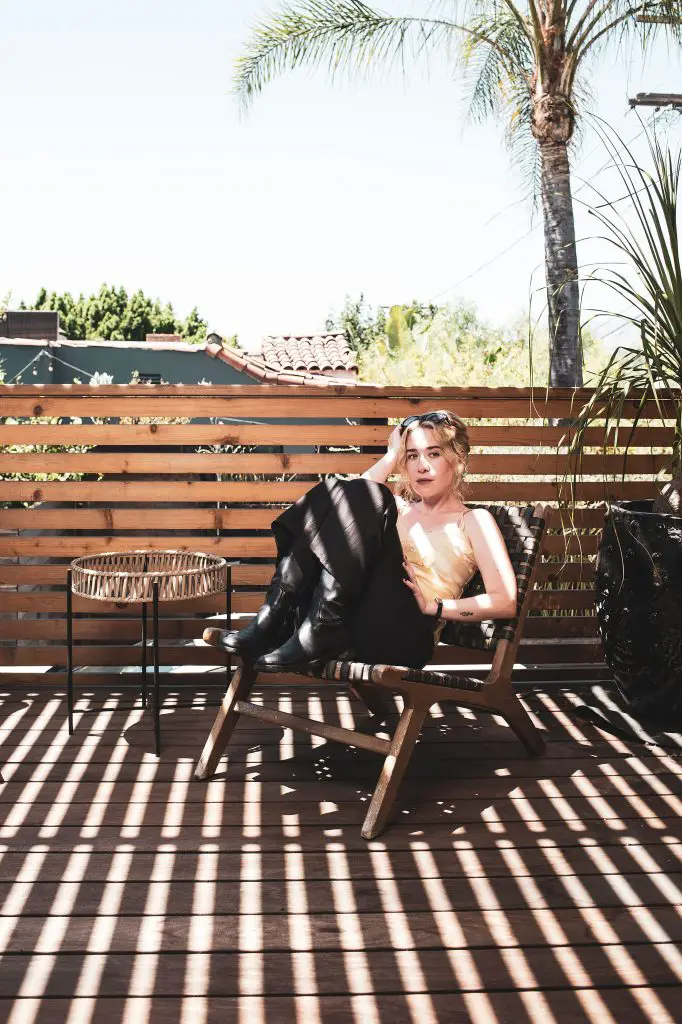
A juxtaposition of beauty and violence is ‘Violins’’ connective tissue. Bodies are admired, desired and threatened, often within the space of a few lines. On ‘Stone Fruit’, intimacy is rendered in the visceral image “I care to stick to you like a clot”, while the title track places the softness of heads resting “lightly on your shoulder” against the threat that they might roll. ‘New Age Trojan Horse’ moves from PMS and the male gaze to men romanticising war; on ‘Lucky’, lemon cake, coffee and her late mother’s necklace sit alongside an image of the Kent State shootings, cancer and “the image of the blade”. Beauty, in Teitelbaum’s writing, rarely gets to exist for long without something more sinister encroaching on it.
The prevalence of violence on the record comes partly from a sense that, while she was writing, it had become impossible to avoid. “I don’t know anybody who’s never experienced any form of violence, whether it’s through imagery, through threat, just from being around people,” she says. “We’ve all, especially as women, experienced it to varying degrees just by existing.”
For Teitelbaum, it also reaches further back. “I had a lot of emotional instability in my childhood, like stuff that really has taken many years – it continues to take time – to sift through,” she says. She can hear the effects of that instability in the record’s “sharp edges”, and ‘Violins’ marks the first time she’s really explored those experiences as a musician. “It feels really good to be angry in the music.”
But amidst darker moments, it’s the pockets of happiness in a troubled world that keep Blondshell keeping on. Teitelbaum isn’t religious, but she wishes she was. “Life would be easier,” she admits. Growing up in a “vaguely culturally religious” household, it’s something she’s wrestled with for a long time. But much like all of life’s big questions, this one doesn’t have a neat answer.
“I’d like to continue to explore ideas of God outside of a person in the sky. People talk about God as love, as outside nature, as connection. But then you’re just talking about love and nature and connection – there are already words for those things – so there’s a part of it that’s inexplicable. I thought about it a lot when I was making the record. It kept coming up in the music.”
On ‘Sea Legs’, specifically, Teitelbaum lists all the places she sees “God” in the world: in the lyrics of Leonard Cohen, in her boyfriend, in antibiotics… all things that have a less than supernatural explanation. “I really believe in love,” she admits, still on the topic of religion. “When I was growing up, I believed romantic love was a thing that would rescue me. Now I believe it’s a feeling and a purpose and a living thing. I was working through a lot of that on this record.”
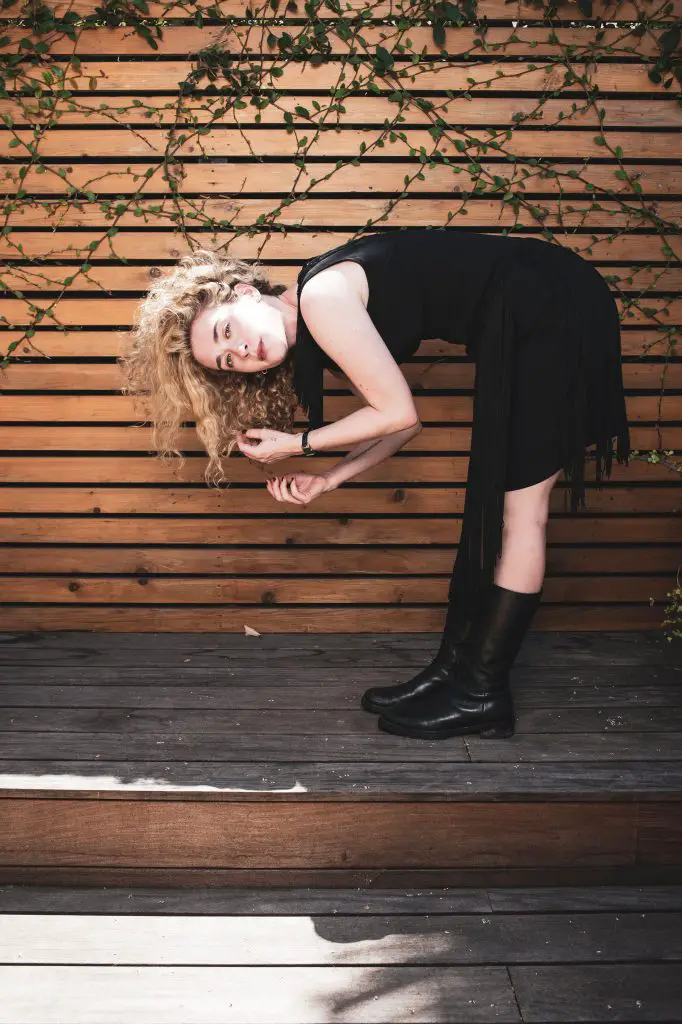
An ability to see life’s little miracles is something that comes with maturity. With so much trauma in the world, perhaps the real miracle is being able to spot them at all. For Teitelbaum, it’s part of a daily practice.
“For a long period of time, I think I bought this idea that you can get to a post-pain part of your life. It’s a difficult but also freeing thing to realise there is no post-pain. You just figure out, with time, how to walk through it differently, and how to get less stuck.”
Blondshell seems increasingly comfortable with a life where the terrible and lovely bits happen at the same time. Sometimes you’re angry. Sometimes you haven’t slept. Sometimes the sun feels good on your skin. And, if all goes to plan, there’ll be plenty more albums to figure the rest out on. “I’d love to make a lot of records in my life,” she says. “I could write forever.”
We hope, very much, that she does.