

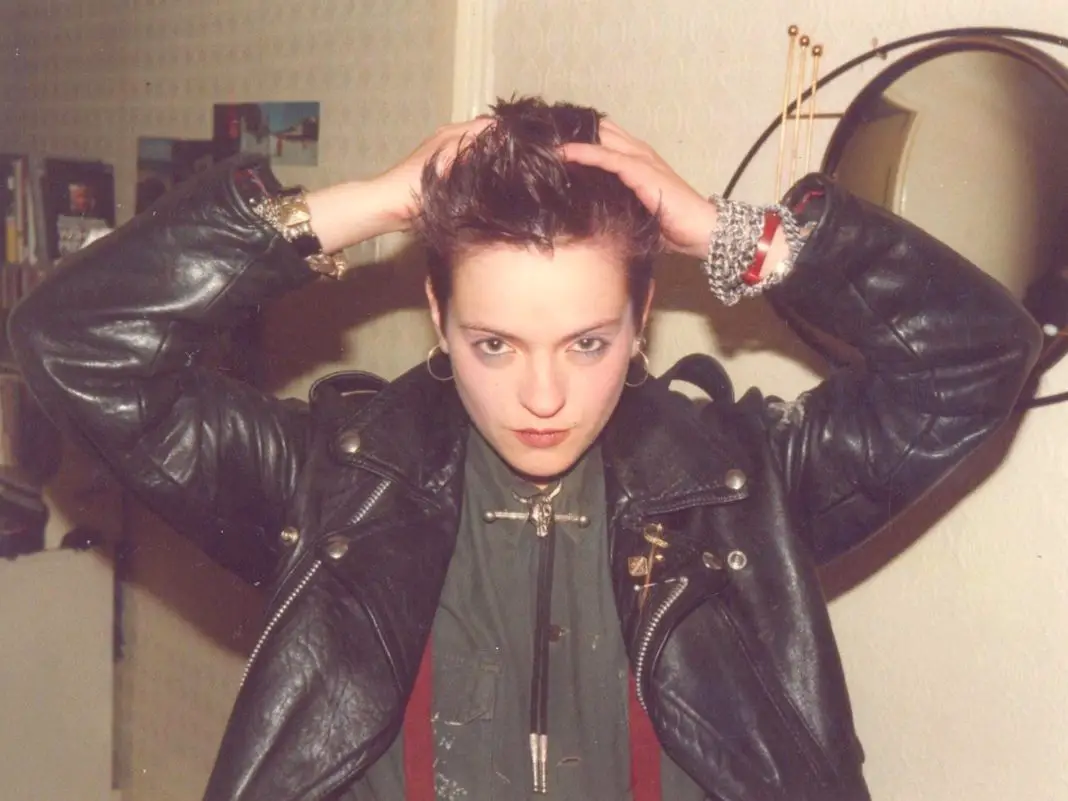
I became a punk aged fifteen in the summer of 1977 because of a boy: a skinny creature with cropped messy hair, pogoing round the edge of the Speedway at the local funfair to Eddie and the Hot Rods’ ‘Do Anything You Wanna Do’. I absorbed his transfixing mix of abandon, glee and total indifference to anyone else and I wanted in. It looked like a lot of fun. Hey presto, I was a punk, and, for the next ten years, punk and its downstream variants were to become my counter-cultural family.
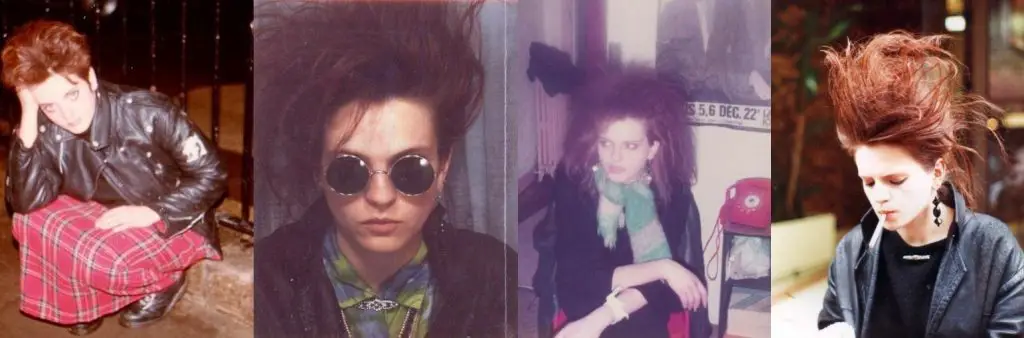
Growing up, I had a lone female icon – Lauren Bacall. Otherwise, it was all about boys. I played football and cricket, wore Brut aftershave because I liked the way the boys at Youth Club smelt, and followed my big brother’s every musical move through glam and underground rock, from T Rex, Gary Glitter (yep), Bowie and Alice Cooper to Lou Reed, Mott the Hoople and the Sensational Alex Harvey Band.
Boys seemed to have bigger dreams, grander horizons and better moves – all Bruce Lee and Cassius Clay, ‘A Clockwork Orange’ and ‘On the Road’, whilst we were left with the social niceties of Jane Austen novels and the never-ending diet of fashion and recipes pulped out by women’s weekly magazines.
But punk heralded change and suddenly there they were: an array of the most glorious, daring, outspoken, beautiful, tough, cool and clever women I’d ever seen. Here are the ten who really counted for me.
The writers
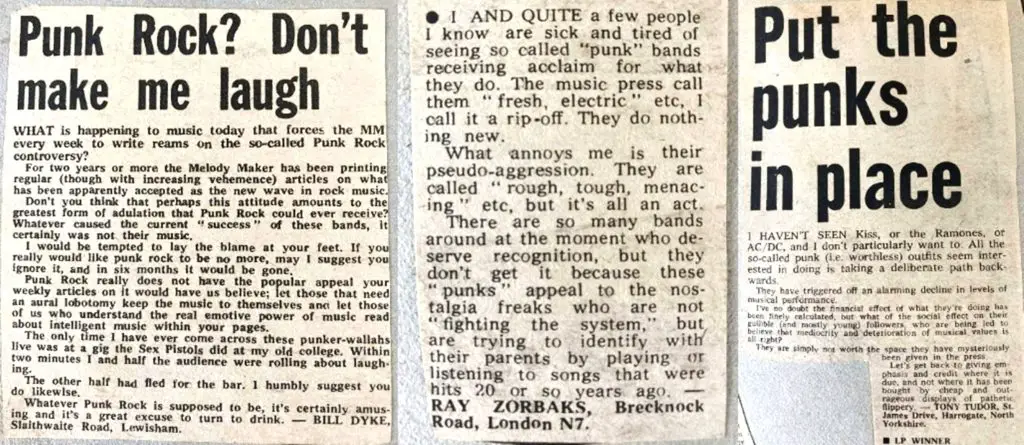
We bought Melody Maker every week in our house in the run-up to punk, back when it was still king of the weekly ‘inkies’. But boy was it white, male, hairy and pompous. When punk arrived, they HATED it, bar one correspondent: early punk advocate Caroline Coon. And Caroline wasn’t only smart and outspoken, she was stunningly beautiful too – and just happened to be stepping out with one of punk’s best-looking boys: Paul Simonon of The Clash.
Like a lot of women in punk’s vanguard (though not actually a punk, as she once told me quite categorically), Caroline was multi-talented. Already a model, actress, scenester and founder of civil liberties charity Release, Caroline was, most importantly, a fine artist. She was a photographer too, responsible for the cover image of The Clash’s ‘White Riot’, a band she would go on to manage during a period of crisis (theirs). When I met John Lydon on his ‘I Could Be Right, I Could Be Wrong’ UK tour in 2024, I took one of Caroline’s prints along for him to sign. He was surprised when I stopped him from signing the front. The verso was the correct place for his signature – and beneath Caroline’s please. She was the artist here.
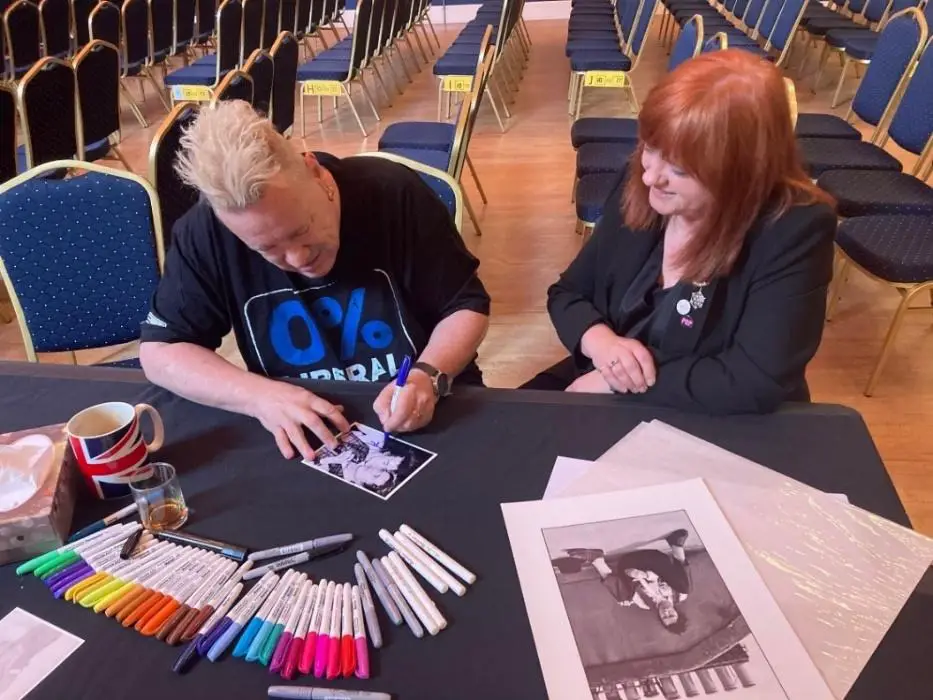
Photo signing session with John Lydon, 2024 – Caroline Coon’s photo on the table
Once punk hit warp speed, the slow-moving Melody Maker was swapped out for NME and Sounds, where I encountered another great woman writer: Vivien Goldman. Vivien was part of the Notting Hill Clash/Slits nexus/cosmos and also a feminist, a musician and big into reggae. Another educator. Women taking part in the important conversations around music was still rare but here were two heartland female voices who felt to be always on the money.
The face and the designer
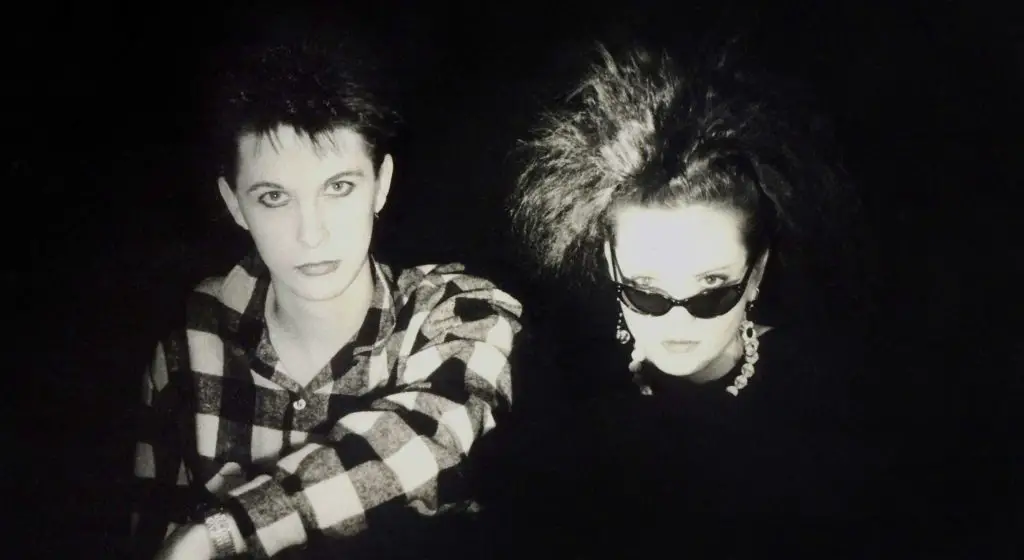
Jordan and Vivienne Westwood were the face of and designer behind the amazing series of King’s Road emporia Vivienne ran with her partner, Sex Pistols impresario Malcolm McLaren. I cannot stress how far away they seemed to a provincial punk wearing her dad’s over-sized shirts, jeans taken in on the seam and charity shop ties. Yet they shone bright on the horizon. You couldn’t help but absorb the way they were expanding the playground for how girls might want to look, play or be. They encouraged me to mutate and plug into the fast-moving punk spirit, which translated as the non-stop reinvention of the self.
‘It wasn’t about bravery because I didn’t care what people thought’ (Jordan Uncovered, Colony Room Green exhibition 2025)
The sun queen and moon priestess
Punk music was mostly being written, played and sung by boys, but there were all-girl groups (The Slits / The Raincoats) and female musicians in quite a few bands too. Then there were two killer frontwomen, impossible to ignore: Debbie Harry and Siouxsie Sioux. Debbie was punk’s sun queen – a geeky goddess with sublime cheekbones and a mouth that looked permanently halfway to sexual ecstasy. She was as gorgeous as she was cool. We loved her – and so did our dads.
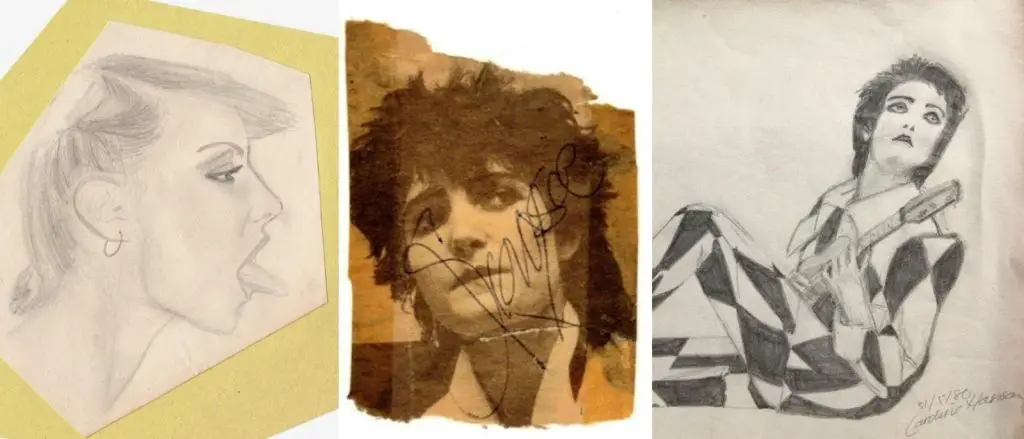
Drawing Debbie and Siouxsie / Siouxsie’s autograph
I don’t think they felt quite the same about La Sioux – right up there with Jordan in the striking-but-scary corner. Moon priestess Siouxsie was high style, unsmiling and of the night: the original Goth princess. The lesson was that cool might be about not caring. Or perhaps about having nothing to lose.
The cool big sisters
There were also women in punk who didn’t feel quite so out of reach. More like cool big sisters. Gaye Advert was one, the super-hot and shy-looking bassist with the Adverts, whose image was a ubiquitous icon of the early era. Pauline Murray of Penetration was another. When Penetration supported Buzzcocks in early 1978, I saw her confront a wall of spit (a horrible early punk habit) with an expression of cold fury. I thought how brave she was, staring down the idiots in the audience and refusing to be beaten. Those ’77 and ’78 gigs were tough arenas. You could be swept from one side of the stage to the other in under fifteen seconds (I know, I counted).
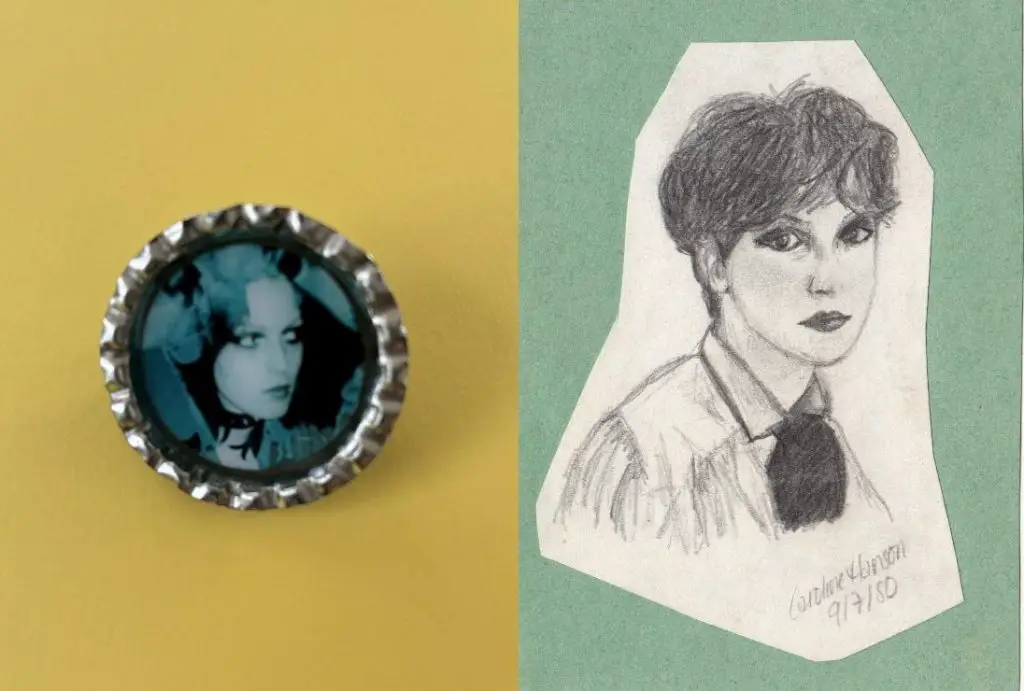
Gaye Advert and Pauline Murray – cool big sisters
The personal goddesses
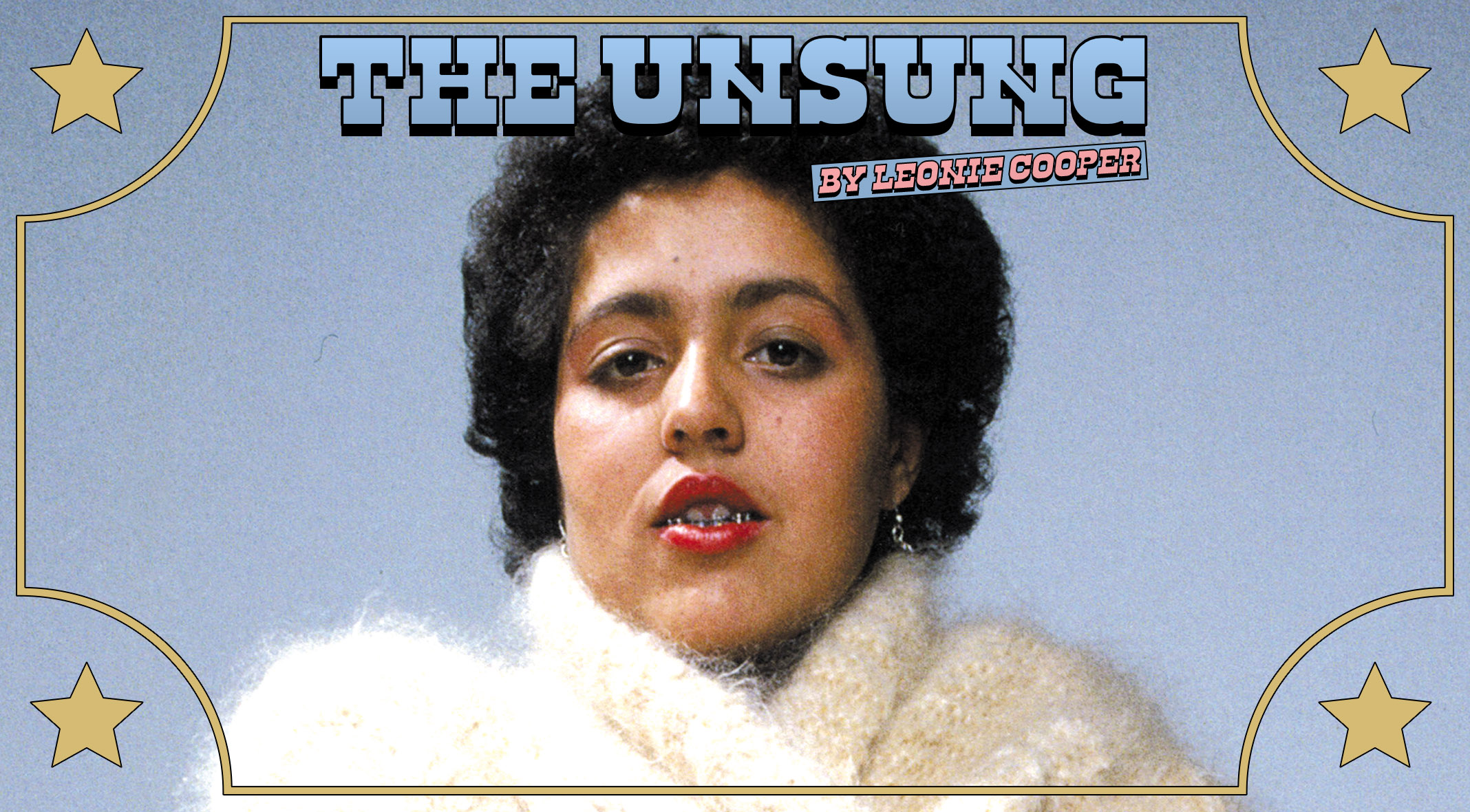
Finally, there were the two women who had a greater effect on me than anyone. The first was Poly Styrene, who made punk ours by singing ‘Oh Bondage, Up Yours’, one of the all-time punk great 45s. Poly was the ultimate in creative control, responsible for her band’s (X-Ray Spex) logo, their sleeve designs and those incredible future-facing lyrics on identity, consumerism, obsession and neurosis. She wore purely cosmetic teeth braces and had a truly unique personal style. Both times I met Poly she was as direct, friendly and accessible as anyone in punk, bar Joe Strummer. She really lived it – she was a woman of the people and a total inspiration.
And, finally, Patti Smith. Sigh. How many decades have I loved this woman? One of the formative females of my life, Patti’s 1975 album ‘Horses’ really was everything for me: an electric, poetic, spiritual, androgynous musical liberation, supercharged with sublime sexual energy. It’s a record that lives constantly in my head. Go Rimbaud.
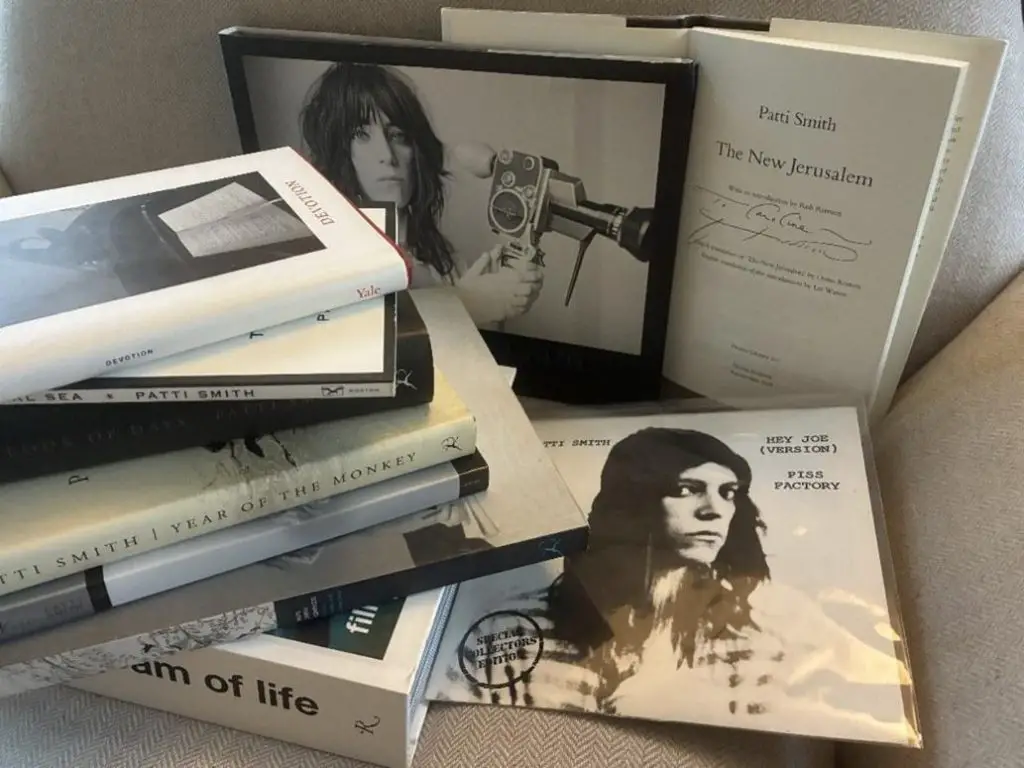
Patti devotion
The sisters in arms
Looking up to other people wasn’t really the done thing in punk, so enough about icons now.
We looked to ourselves and to each other too, which was the whole point of it, really. All that future mirroring was because we were ultimately searching for ourselves. So, here’s to the glorious punk girls I met along the way too. You were all quite magnificent.
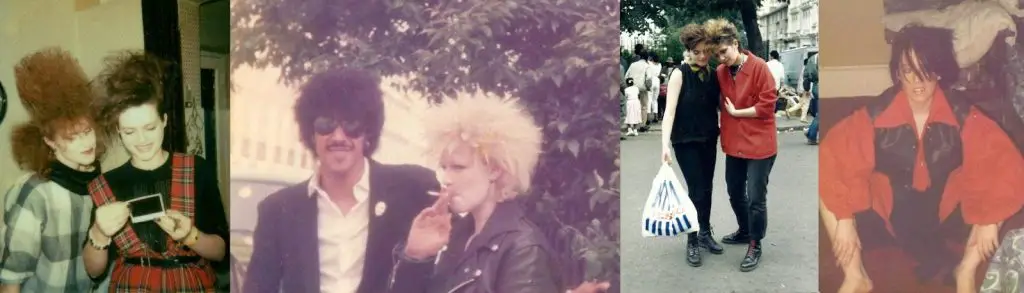
L-R: Philippa, Penny (RIP), Gordana & Carole



This article is written amd illustrated in a wonderfully evocative way and takes me straight back to this time as a young girl, thank you, you brought a big smile to my face
Great read. Took me right back. How fortunate we were to experience and embrace this movement/shift.