

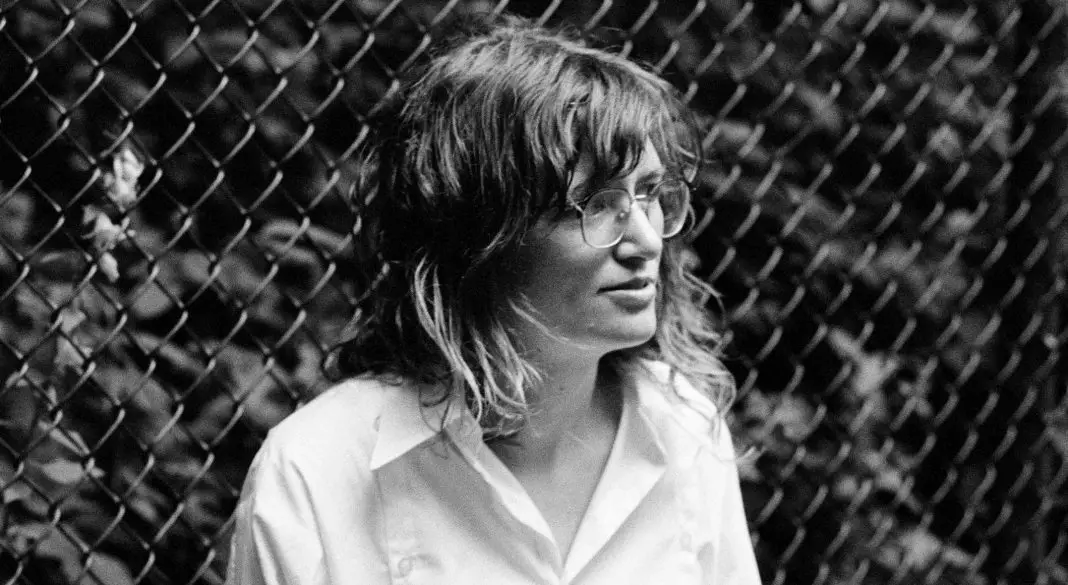
If you can tell a lot about a person by the circles they keep, then Toronto’s Charlotte Cornfield clearly must be onto a winner. A seasoned purveyor of acutely observed, often gut-wrenchingly personal slices of everyday life, for sixth album ‘Hurts Like Hell’, Cornfield found herself looking outwards and inviting more people in. Enter… well, half of the US and Canadian indie inner circle. Feist, Big Thief’s Buck Meek and Christian Lee Hutson all volunteer guest vocals; Palehound’s El Kempner plays guitar throughout. Philip Weinrobe (the man behind the desk for Adrienne Lender’s recent solo work) signed up as producer, while Cornfield’s first live outing during this writing period was as a guest of Broken Social Scene during their huge Canadian support slot for Boygenius.
There’s a reason why this little black book of legends have all planted their flag in Cornfield’s corner. ‘Hurts Like Hell’ has the rare ability to knock you sideways with a single perfect line (see ‘Lost Leader’ “These aren’t your friends / They’re just people that you know who you are”), coupled with a newfound desire to “pull me out of myself a little bit, and be less of a self-editor and more open to new experiences”. A lot of this comes from Cornfield’s current life as a new mother. ‘Hurts Like Hell’ is her first record since giving birth to her now-three-year-old daughter and, she explains, calling from home whilst balancing parenting and promo duties, the experience has changed her whole approach to writing.
“I think it has shifted the intention, which maybe previously would have been to mine my personal experiences and emotions. This time, the intention I felt was really just to tell stories and let those stories take me on journeys,” she says. “Some of them are pulled from my own life, and some of them are not, but they’re all things that feel very resonant to me in different ways. For me, shifting out of being just an autobiographical songwriter into something else felt like there was a different sort of freedom, and I didn’t feel so much pressure on myself to constantly write cathartic songs that were going to make people cry.”
Spoiler alert: some of these songs might still get you a little misty. But across the record there are also trips down memory lane (‘Squiddd’), wry character studies (‘Lost Leader’), refreshingly raw documents of new parenthood (‘Bloody and Alive’) and more. We caught up with Charlotte to hear all about it.
Hi Charlotte! Where do we find you right now?
I’m currently at home in Toronto, juggling these things with getting my three-year-old out the door to daycare so it’s a little intense at the moment, but I know it’s temporary!
Being a new parent seems to have changed a lot of things when it came to approaching this record…
It’s been really freeing. I’ve been experiencing so many things that I’ve felt a million times, but now, with somebody else seeing it for the first time, there’s this fresh perspective that I think has really informed stuff. And writing these songs, I really had so much fun, whereas in the past it’s been fun, but it’s also been self-therapy.
I do enjoy that your really fun record is called ‘Hurts Like Hell’…
Well, that title is a little bit cheeky, and I also thought it was funny in reference to the song ‘Bloody and Alive’, which is literally about childbirth or the moments just immediately post-childbirth. The idea is that the record is written from this perspective: it hurts like hell when you’re in it, and then you get to the other side of something with a new outlook.
Writing characters and people outside yourself was a new thing for this record – where were you pulling inspiration for those people from?
I pulled a lot from books, movies, and TV; sometimes I would see a scene that would inspire me to write something. I’ve always been drawn to short stories as a form, so I felt like this was really the first time I’ve tried to go deep on that in a song. Then for the songs that were more from my own life, it was about revisiting an experience in detail and trying to explore aspects of it that are still mysterious to me. The question marks and the ambiguity and the mystery of things is really an intriguing thing to write about.
The faded rockstar character in ‘Lost Leader’ is a particularly compelling one – tell us about him.
That character is a composite of a few people that I’ve encountered over the years, but really it’s just something that I’ve witnessed in my own fandom of music as I’ve come of age and been in this community for a long time. I see people who I used to really worship in my teens just be human, and there’s a wide scope of that: sometimes they’re human beings with flaws like all of us, and then sometimes there’s some big ego, narcissism struggles, and addiction and abuse of power. I don’t think the song is a comment on that in a dark way, it’s more just saying: this thing is real. This character is real. I think there’s an empathy for their struggle, because the problem of putting people on a pedestal is that inevitable fall from grace when you learn that everybody’s a human being at the end of the day.
‘Squiddd’, meanwhile, is about a more wholesome meeting at a real-life gig of a band called Crabbb years ago. Were you aware that we have a post-punk band called Squid over here…
Yes! I didn’t know until after I wrote the song, and then when we were in the studio, I was like… should we change the song? And everyone said, ‘No, no, no, just leave it…’ [That song is set] at a turning point in my life that I keep revisiting because there was so much serendipity and kismet involved. I just remember being so struck by that show. It was in Montreal, in the loft scene in 2012, which was a real moment in time, so I just wanted to revisit that and inhabit that.
You’ve spoken before about being in the city as Arcade Fire and Broken Social Scene were blowing up – how inspiring was that time?
I moved to Montreal in 2006 for university, and then when I moved to New York in 2012 it felt like the end of that specific era, which is why I had the itch to leave and go explore something new. Those times were so potent and powerful. In Montreal, at that time, it felt like you could do things. I just remember it felt so empowering to book a show, to bring people out, to have members of bands that I love show up at shows with everybody drinking at the same bars, eating in the same restaurants. At the time, my music world in Montreal was limited to mostly Anglophone, indie rock and so it was actually a really small community and I met people and felt very welcomed as an artist really quickly. It just felt like I was really dipping my toes into doing this properly.
There’s a big group of musicians involved with this record. Why did you want to invite them all in?
The last record I made, it was just this amazing producer Josh Kaufmann and me playing all the instruments. And I loved doing that, but I knew that I wanted to do something different with this record and have more people be involved. And then, when I started chatting with Phil Weinrobe who produced it, he was like, ‘Well, why don’t we just put a band in a room and see what happens?’ So we put our heads together and put together a band of dream musicians. No one heard a note before the first day of tracking, so there was this real freshness and emotional immediacy to it.
Musicians including Feist, who I believe you met on a Whatsapp group for touring mums? How important has that support network been?
It’s everybody from bands with huge budgets who are touring on buses and have the luxury experience to people who can’t afford a babysitter, travelling in a Corolla. Everyone has a lot of different kinds of life stressors, but there’s this common ground which we’re all navigating of how to be a mum and a musician at the same time. It’s been a beautiful support network of everything from ‘what kind of pack and play should you have on the road?’ to ‘I feel like I’m about to have a breakdown, what should I do?’
What would you change in the industry to make it better for working mothers?
I think just more support at every level. Normalising mums being on the road and it not having to be this huge thing to ask a promoter or venue to make accommodations for it. A lot of the types of things that I’ve been hearing in the chat are: I got dropped by my agents after I had a baby. My manager dropped me three months after I had a kid, or my manager is pressuring me to do X, Y, and Z and it means I have to be away from my kid and I don’t want to. There is this discrimination, and nobody cares when it’s dads because somebody’s at home holding down the fort and taking care of the kid. But if it’s a mum, it’s like people still have this bias that you should be at home, or if you’re not, then what use are you if you’re not able to perform a million shows a year? I’m fortunate to live in Canada where there’s a social safety net and some support for the arts, but a lot of the folks in this group chat are in the US where there’s none of that and I just really feel for all of my peers down there who are trying to make this work.
Dealing with those systems, community becomes even more important than ever – do you feel like you’ve properly found yours?
I feel so supported by the community. And I think, because the business of it is so tumultuous and weird, the humanity of being able to support people I believe in and feeling that community support from other people is how this thing is sustainable. Definitely on this record, I felt so supported and I’m so grateful. The generosity of time and spirit and musical energy has meant a lot to me.
Lucy Dacus is another musician who’s sung your praises online – have your paths crossed?
So we actually first met back in 2016 when I was running a small music venue in Toronto called Burdock Music Hall and she played a show there to like, 35 people when ‘I Don’t Wanna Be Funny Anymore’ had just come out. I loved the show and I loved that record and then I just watched her blow up. She’s always been super friendly – the first show that I played after my kid was born was when Broken Social Scene asked me to sing with them when they were opening for Boygenius in Toronto, and then the three of them [Boygenius] came to a show that I played in LA in 2024. Lucy invited my partner and our daughter to her soundcheck in Toronto when she was last in town about a year ago – she’s just really, really sweet.
And talking of candid female songwriters, we hear you’re a big ‘West End Girl’ Stan…
Oh, I just love the detail and I love that it’s being written by somebody who’s not holding back and who’s unafraid. I know a lot of the writing about this record has been like, ‘These are the receipts and these are the things he’s done’ but I’m not interested in that. The hooks are amazing, and I just feel like I’m listening to somebody who is writing unselfconsciously at the height of inspiration and that is very compelling and moving to me.
You’re an artist who also writes very openly, and without a lot of ego.
I think letting go of ego is huge. There’s a line on the song ‘Long Game’ where I say, ‘More doing, less trying’. And I think that’s sort of the MO of this record. Instead of trying to have the songs be anything in particular, just do something and see what comes out. Don’t self-edit, don’t censor yourself, and try to be as fearless as possible.
Solid advice! What do you feel like you’ve learned about yourself as an artist during this process?
I think it’s just about letting yourself be open and be loose, and trying to invite in a freer approach. That’s the thing that I wanted to do and that I want to continue to do on this journey – to just let go of any ideas of what a song should be. Just… let them go.
Spoken like the true Frozen-rewatching mother of a young child! Thanks Charlotte!